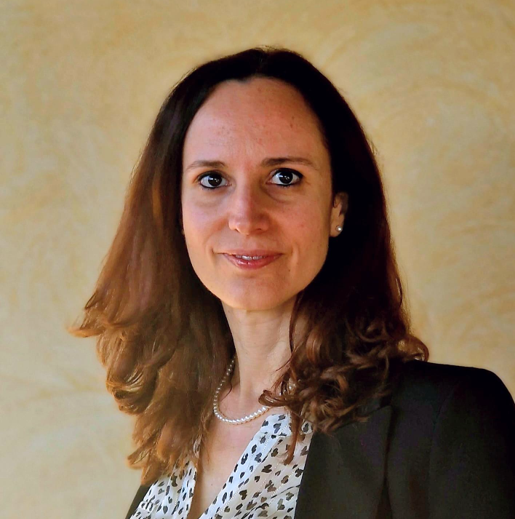
Federica Caselli (Lab Head) is an Associate Professor of Bioengineering at the University of Rome Tor Vergata. She holds dual M.Sc. degrees in Medical Engineering (2006) and Mathematics (2008), as well as a Ph.D. in Biomechanics (2013) − a multidisciplinary background that shapes her scientific approach. Her research focuses on developing innovative lab-on-a-chip devices for diagnostics and life sciences, with a particular emphasis on microfluidic impedance cytometry. She explores advanced solutions for single-cell biophysical phenotyping and manipulation, leveraging model-based device design and cutting-edge signal processing techniques. Her recent work emphasizes multifunctional platforms and the integration of neural-network-based data analytics.
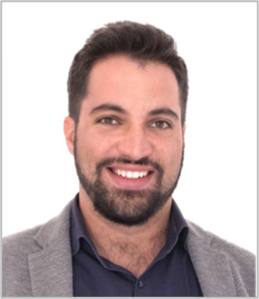
Riccardo Reale is a Tenure-Track Researcher in Bioengineering at the University of Rome Tor Vergata. He received his PhD in Electronics and Computer Science from the University of Southampton in 2018. His research centers on the design and integration of microfluidic systems for single-cell analysis. His work bridges electronics, photonics, and biomedical engineering to develop high-performance lab-on-chip platforms for medical diagnostics, with a particular focus on cancer and leukemia. He also applies artificial intelligence and advanced signal processing to enable robust, real-time data analysis, device optimization, and automated operation of microfluidic systems.
Paolo Bisegna is a Professor of Mechanics of Materials and Structures at the University of Rome Tor Vergata, where he also serves as Director of the Ph.D. Program in Structural Engineering. He holds M.Sc. degrees in Engineering and Mathematics, as well as an M.D. degree − an exceptionally multidisciplinary background that informs his scientific approach. His research spans biomechanics, mechanics of materials and structures, and the development of lab-on-a-chip technologies. By integrating mathematical modeling, engineering principles, and biomedical expertise, his work contributes to the design and optimization of innovative microfluidic devices for biological and medical application.
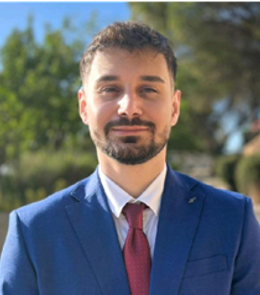
Cristian Brandi (PhD student) received his M.Sc. in Medical Engineering in 2022. His research interests include the design, implementation, and testing of lab‑on‑a‑chip devices for the characterization and manipulation of single cells and particles. His work focuses on electro‑optical sensing and on active sorting using dielectrophoresis or piezoelectric actuators. His approach is highly interdisciplinary, combining numerical modeling, signal processing, and data analysis techniques.
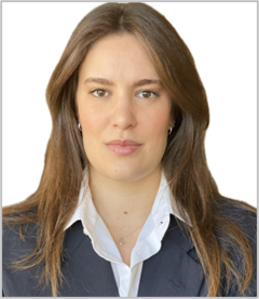
Marta Righetto (PhD student) holds an M.Sc. in Biomedical Engineering from Politecnico di Milano (2023). Her research focuses on designing and developing microfluidic systems for the non‑invasive monitoring of cells and bioconstructs, for example during growth or after drug exposure. By combining dielectric spectroscopy with deep learning, her interdisciplinary work aims to advance innovative solutions for personalized precision medicine.
Active Collaborations
- Dr. Adele De Ninno, Italian National Research Council, Institute for Photonics and Nanotechnologies (CNR‑IFN), Rome, IT
- Prof. Nathan S. Swami, University of Virginia, VA, US
- Dr. Aude Bolopion, FEMTO-ST Institute, Besançon, FR
- Prof. H. Morgan, University of Southampton, Southampton, UK
- Dr. Daniela Roversi (from Prof. L. Stella group), University of Rome Tor Vergata, Department of Chemical Science and Technologies, Rome, IT
- Center for life nano- and neuro- sciences (CLN2S), Italian Institute of Technology, Rome, IT
- IngeniArs s.r.l., Pisa, IT
- Elettronica ELT Group, Rome, IT
ALUMNI
Research assistants/Post-docs
- Marta Righetto, research assitant, MIC-AIM project (MUR, PRIN 2022)
- Cristian Brandi, research assitant, MicrosystemQ project (Lazio Innova, Research Group 2020)
- Sergio Spanò, post-doc MicrosystemQ project (Lazio Innova, Research Group 2020)
- Riccardo Reale, post-doc, MUSIC Project (MIUR, SIR 2014)
- Adele De Ninno, post-doc, MUSIC Project (MIUR, SIR 2014)
- Vito Errico, post-doc, MUSIC Project (MIUR, SIR 2014)
Visiting scholars
- Alexis Lefevre, visiting PhD student from the FEMTO-ST Institute
Master’s students
- Irene Giannella – In silico design and evaluation of parallelization strategies for microfluidic impedance cytometry (A.A. 2025/2026)
- Laura Quarta – Computational approaches for the simulation of microfluidic devices with piezoelectric actuators (A.A. 2024/2025)
- Fabiola Vincenti – Bioimpedance measurements: development of the experimental setup and FEM modeling of a 3D cell construct (A.A. 2023/2024)
- Federico Petitta – Development of a finite element toolbox for assessing the compatibility between nanovials and impedance based microfluidic cytometry (A.A. 2021/2022)
- Cristian Brandi – Finite element modeling and simulation of a microfluidic device for cell sorting (A.A. 2021/2022)
- Irene Bettini – Image analysis in microfluidic cytometry: application to palynology (A.A. 2021/2022)
- Martina Tomassini – Unsupervised learning techniques for cell phenotyping via electrical impedance cytometry (A.A. 2020/2021)
- Tiziana Nepi – Modeling and simulation of a hyperbolic microchannel with electrodes for assessing cell deformability (A.A. 2020/2021)
- Valerio Spennato – Development of signal processing algorithms for electrical impedance cytometry (A.A. 2020/2021)